
ChatGPT and Gemini in 2026 – how have both systems changed?
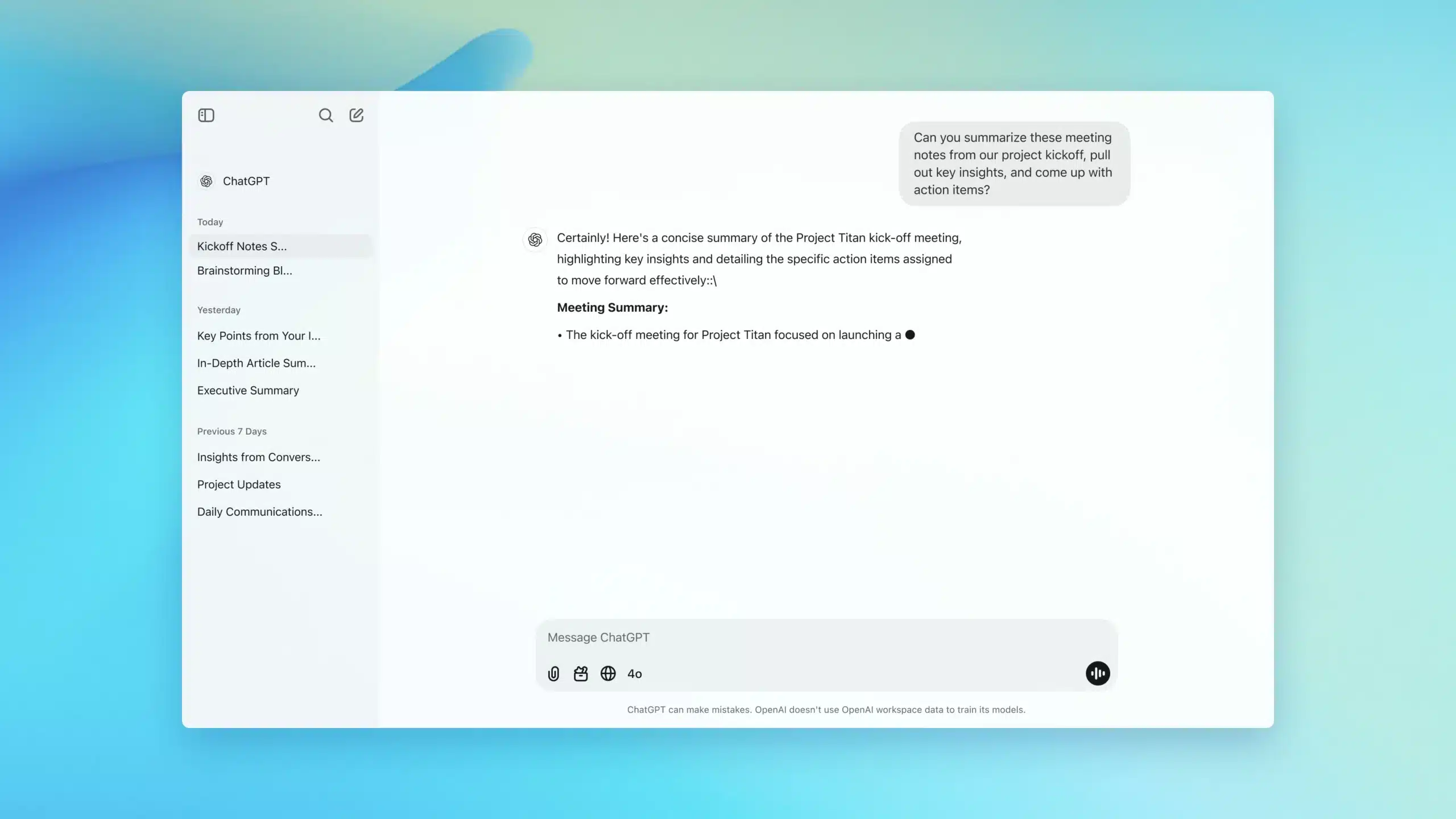
The year 2026 brings a whole new generation of AI models that no longer work as “question answering programs”, but as hybrid information processing systems. ChatGPT and Gemini have evolved faster than the entire ecosystem of creative tools, and the differences between the two are beginning to resemble the differences between iOS and Android: two worlds, two styles, two completely different approaches to what human-assisted AI should look like.
Latest versions of the models: ChatGPT 5.x, Gemini 2.1 Ultra and Nano
In 2026, both models make a huge functional leap, but each in a different direction.
ChatGPT in 5.x versions focuses on deep personalization, the ability to work on huge blocks of context, and a better understanding of user intent. In practice, this means that it can create entire project structures – e.g. marketing campaign plans, multi-level SEO articles, social media content series or complex growth strategies – without the need for constant adjustments. The 5.x model is also much more flexible in creating a long form: the narrative is logical, the style is consistent, and the structure of thinking resembles the work of an experienced expert.
On the other hand, we have the Gemini 2.1 Ultra – a model that in 2026 dominates in the area of searching, data analysis and working with multimodal inputs. Google uses its most powerful advantage: access to the Internet, search engine index, and integration with Google Workspace services. Gemini Ultra can not only process data, but also assemble it into ready-made reports, dashboards and presentations. And it does so at a pace that many companies have begun to treat as a standard of work.
Next to the Ultra version, there is also the Gemini Nano – a model that works locally on devices, especially Android. This is the first mass example of offline AI capable of analyzing camera video, audio, and device context without sending data to the cloud. In 2026, it’s a game changer for privacy and the transfer of some AI from servers to smartphones.
Main differences in the architecture and method of multimodal processing
Multimodality in 2026 is no longer about the model “being able to take on an image or text”. This is an outdated approach. Modern multimodality acts as a common brain that processes everything simultaneously: image, sound, video, text, code, sensor data, and user context.
And here comes the fundamental architectural difference:
ChatGPT 5.x uses an integration approach – the model not only processes multiple modalities, but can combine them into a logical sequence of actions. It analyzes the video file, extracts key moments, generates a description, creates a script for shorts, and automatically prepares a thumbnail based on a frame from the video. All in one go. This is task-based multimodality.
Gemini 2.1 Ultra works differently – its architecture is designed to retrieve and process information from huge data streams. It has the nature of an analyst: it is able to break down a complex file, such as a 100-page financial report, into logical parts and optimize the entire analysis in real time. He uses multimodality as a detective tool – he understands the context, correlates data and searches for dependencies.
The difference is subtle but significant:
- ChatGPT “creates”.
- Gemini “analyzes”.
- Both powerful, but for different types of tasks.
A new direction of development: from chatbots to autonomous AI agents
The most important change of 2026: ChatGPT and Gemini are no longer chatbots. Chatbot is a relic. Now AI agents matter – systems that not only respond, but do the work on their own.
ChatGPT 5.x gains the so-called operational capability. It can perform sequences of actions: generate content, forward it, create files, integrate with applications, check results, and correct errors without human intervention. It’s an AI that acts as a mini-employee, not like a one-paragraph author.
Gemini 2.1 Ultra, on the other hand, relies on contextual agents. With Google Workspace integration, the agent can manage documents, sheets, emails, calendars, and even analyze YouTube ads and statistics. This is an assistant who knows your company better than many marketing employees.
This completely changes the work of creators, marketers, and companies:
- Instead of writing commands – you define a goal.
- Instead of controlling the process – you control the effect.
- Instead of creating everything manually – you supervise the work of agents.
The year 2026 is therefore the first moment when artificial intelligence actually does the job, and the user plays the role of a strategist.
Comparison of multimodal capabilities – text, image, video, audio and documents
Multimodality in 2026 is no longer an add-on to the model, but the core of all AI. ChatGPT and Gemini are fighting the hardest in this space, because this is what determines which tool becomes a real business assistant and which only generates answers. For creators, SEO, marketing and companies, differences in the interpretation of images, videos or documents translate into work time, content quality and process automation.
How do both models interpret images and PDFs in 2026?
In 2026, image interpretation is not just about “what’s in the picture”. Models must understand the meaning, structure, and logic of information.
ChatGPT 5.x is distinguished by the fact that:
-
extracts context, intention and meaning from the image,
-
can create a product description, a list of features, keywords and CTAs based on a photo,
-
from one screen, Google Analytics creates trend analysis and optimization hypotheses,
-
Converts PDF scans into structured data and substantive summaries.
It is a model that works on the basis of an image, not just describes it.
Gemini 2.1 Ultra , on the other hand, is the king of documents and data:
-
wins in precise analysis of charts, tables and PDFs,
-
uses Google OCR and indexing technology,
-
understands the layout of the document better than many office workers,
-
The Nano version works offline on the device, analyzing photos and documents without sending them to the cloud.
The difference between the two is crucial:
ChatGPT understands meaning and creates.
Gemini understands data and analyzes.
Video analysis and scenario generation – who better “understands” traffic and context?
Video is the most difficult format for AI, because it requires at the same time:
-
traffic analysis,
-
interpretation of emotions,
-
object recognition,
-
understanding sequence and dynamics,
-
and making sense of a sequence of events.
ChatGPT 5.x dominates creativity:
-
creates storyboards, scripts and shorts of material,
-
indicates the best moments under TikTok and Reels,
-
generates entire video campaigns based on a single file,
-
He understands video like a director, not a technician.
The creators love 5.x for being able to give the materials a narrative, rhythm and emotion.
Gemini 2.1 Ultra wins in technical analysis:
-
detects scenes, errors, exposure and stabilization problems,
-
Combines video analytics with YouTube Analytics
-
predicts how the material will perform,
-
understands video like an engineer and an analytical system.
Simple comparison:
ChatGPT – creativity and storytelling.
Gemini – technical analysis and SEO video.
Audio and speech – quality, transcriptions, synthesis and side effects (sound hallucinations)
Audio is becoming one of the most important formats in 2026 – the development of podcasts, voice ads, and voice-first content requires models that understand not only words, but also emotions, tone, and intent.
ChatGPT 5.x:
-
gives almost perfect transcriptions,
-
recognizes emotions, pace, dynamics of expression,
-
creates audio narrations matched to the timbre of the voice,
-
can “rework” the recording so that it sounds professional and clean,
-
It generates audio with natural pauses, whispers, and modulation.
It’s a model that creates an atmosphere.
Gemini 2.1 Ultra:
-
Better copes with background noise and polyphonic recordings
-
works well in transcripts of meetings, conversations and webinars,
-
analyzes the structure of statements like data – great for training and sales,
-
thanks to the integration with Google Meet and Workspace, it is more “office-like”.
At the same time, Gemini in 2026 has a greater tendency to sound hallucinations, i.e. incorrect addition of words when the recording is quiet or distorted.
Text generation quality – real tests 2026
In 2026, the quality of text generation has become much more complex than the “prettiness” of sentences alone. Models must be logical, factual, narrative, coherent, hallucination-proof, and above all, they must write in such a way as to support the user’s goals, not just create literarily correct paragraphs. In this category, the difference between ChatGPT and Gemini becomes particularly clear: both are powerful, but each shines in a different discipline.
ChatGPT in Narratives and Long Forms vs Gemini in Analysis and Facts
The most noticeable difference between these models in 2026 is that ChatGPT writes like a human and Gemini writes like a data expert.
ChatGPT 5.x is absolutely dominant in:
-
long forms such as articles, stories, guides, industry reports,
-
narratives that require tone, rhythm, emotion and guidance of the reader,
-
writing content that is intended to engage, touch on or explain complex topics,
-
matching the style to a specific brand, customer or persona,
-
creating consistent structures of SEO texts without logical chaos.
The 5.x model can maintain a narrative of up to tens of thousands of characters without losing its meaning – which was a challenge even for the best LLMs a year ago.
The Gemini 2.1 Ultra , on the other hand, wins in:
-
analysis of facts and data,
-
summarizing the content in a hard, precise and water-free way,
-
creating technical descriptions, regulations, documentation,
-
verifying the correctness of information (integration with the Google search engine),
-
creating content that is as substantive and factual as possible.
Gemini doesn’t have the “creative spark” of ChatGPT, but it’s more blunt and analytical, which works great for documents, analytics, and content that needs to be factually flawless.
The shortest possible comparison:
ChatGPT – he writes beautifully.
Gemini – he writes correctly.
Differences in logic, coherence and “step” thinking
Text logic is a critical component in advanced work with AI. In 2026, both models have undergone a major evolution.
ChatGPT 5.x:
-
has a much better logical understanding than earlier versions,
-
can create texts in which he/she builds argumentation step by step,
-
maintains the continuity of threads over a very long space,
-
handles multi-stage analysis (the so-called chain-of-thought) in a more natural way,
-
it avoids repeating the same content, which was a problem with ChatGPT 3.5 and 4.
An additional advantage is that 5.x can think the way the user needs it to – creating logical blocks, segments, plans and structures.
Gemini 2.1 Ultra:
-
wins when a task requires hard logic, precision and mathematical consistency,
-
can analyze data and formulate conclusions without embellishments,
-
does a great job in “technical” tasks: checklists, instructions, comparisons, tables,
-
It sticks more to the facts, because it uses up-to-date search engine data.
At the same time, Gemini can be rigid in the narrative – logical, but less flexible.
Summary of logic:
ChatGPT – better at narrative logic.
Gemini – better in analytical logic.
Comparisons on SEO, growth hacking and copywriting tasks
This is the moment when the differences between the models begin to translate into real business results.
SEO (blog content, pillar articles, topical authority)
-
ChatGPT 5.x: wins anything that requires structure, narrative, large articles, and topic clusters. It is better at building consistent semantic nodes, applying natural keyword saturation, and creating texts that humans and algorithms like.
-
Gemini: Great for analyzing SERPs, suggesting keywords, finding content gaps, and creating comparison tables.
Growth hacking (strategies, checklists, creative experiments)
-
ChatGPT: better at generating ideas, campaigns, viral concepts, unique narratives.
-
Gemini: Better at analyzing market and competition data.
Copywriting (landing pages, CTA, storytelling, email marketing)
-
ChatGPT: a natural talent. In 2026, he writes texts that sound like the work of a senior copywriter – emotion, rhythm, tone, sense of the recipient’s psychology.
-
Gemini: more technical, drier. Good for descriptions, specifications, e-commerce, but not much marketing “spark”.
Briefly and to the point:
-
For SEO → ChatGPT for writing, Gemini for analysis.
-
For growth hacking → ChatGPT for creative strategies, Gemini for data.
-
For copywriting, ChatGPT → without competition.
AI video – who wins the race for the creator market?
In 2026, the video market is no longer just about camera, editing and creativity. This is the terrain where artificial intelligence has taken over all stages of production: from the script, through editing, to optimization for algorithms. Creators, agencies, and companies are working faster than ever because AI takes the burden off tasks that used to take the burden off entire teams. And this is where the differences between ChatGPT and Gemini are clearly visible: one is a creative brain, the other is an analytical brain.
ChatGPT and integrations with video tools (Suno, Runway, Pika, InVideo)
ChatGPT 5.x is growing into a central tool for video creators in 2026, as its integrations with generative tools open up the possibility of creating entire productions “from scratch”.
Suno – ChatGPT generates song lyrics, prompts rhythm, atmosphere, audio narration, and then uses Suno to create a finished song. Perfect for intros, branding and viral shorts.
Runway – ChatGPT designs storyboards, frames, camera motion descriptions, and Runway generates shots, effects, and transitions. The combination allows you to create ads and trailers at the creative agency level.
Pika – ChatGPT writes the script, dialogue, and instructions for the character’s movement, and Pika turns these into animated or hyper-realistic video sequences. In 2026, he is one of the most used duos of TikTok and YouTube Shorts creators.
InVideo – ChatGPT prepares a complete script, scene structure, CTA, narrative description and generates A/B variants.
Why is ChatGPT dominating?
Because it can create the logic of the content, the story and the emotions, and this is something that purely technical tools cannot do alone. In 2026, the creators declare that ChatGPT has become a creative director in their pocket.
Gemini in the analysis and optimization of video content on YouTube and TikTok
If the goal is reach, algorithm and performance – the Gemini 2.1 Ultra is the undisputed leader.
Google has an advantage that cannot be bypassed: full access to YouTube, Android, Google Search and Google Ads data. Gemini uses this to perfection.
The model can:
-
analyze videos frame by frame,
-
predict when viewers will stop watching,
-
suggest changes to the structure of the video to improve retention,
-
optimize thumbnails and titles for CTR,
-
generate lists of keywords for video positioning,
-
analyze competition and trends on TikTok and Shorts,
-
assess the speed of installation, motion dynamics and energy levels.
Gemini understands video not as history, but as data that needs to be optimized.
And that’s why creators who want to grow analytically use Gemini as a tool to:
-
audits of YouTube channels,
-
planning content for seasonal trends,
-
improving retention,
-
optimization of short forms in the context of algorithms.
Briefly:
ChatGPT creates a video. Gemini makes the film grow.
Short-form generation vs long-form advertising productions
The difference between the models becomes most pronounced when we compare their effectiveness in two key video categories: short-form (TikTok, Shorts, Reels) and long-form content (ads, promotional videos, education).
Short Forms (TikTok, Reels, Shorts)
ChatGPT:
-
brilliant at coming up with ideas, hooks, dynamic shots,
-
creates instant scenarios up to 10-30 seconds,
-
integrations with Pika/Runway allow you to generate ready-made shorts,
-
He can write natural, viral dialogues.
Gemini:
-
optimizes short forms for algorithms and retention,
-
suggests the best clip length, editing rhythm and pace,
-
analyzes the competition in a niche.
Conclusion:
ChatGPT wins in creation, Gemini in optimization.
Long advertising productions and premium content
ChatGPT 5.x:
-
writes complex scripts divided into scenes,
-
creates mood boards, dialogues and shot descriptions,
-
can lead a narrative at the level of a professional copywriter,
-
combines text, video, and audio into coherent storytelling.
Gemini 2.1 Ultra:
-
analyzes shots from a technical point of view,
-
controls the compatibility of brand, color and pace,
-
creates precise storyboards based on market data,
-
It assesses whether the ad has conversion potential.
Conclusion:
ChatGPT → a director and screenwriter.
Gemini → a producer and analyst.
Together, the two models form a duo that replaced smaller creative agencies in 2026.
Code, automation, and agenting – key features of 2026
The year 2026 is the moment when AI is no longer just a tool for writing texts or generating ideas. It enters the level of autonomous agents, i.e. systems capable of performing complex tasks without constant human supervision. This is where the most strategic duel between ChatGPT and Gemini takes place. Who is better at code? Who is building more stable automations? Who can manage processes so that the company can actually speed up work by 200-300%?
This is the category in which the differences between these models have the greatest impact on real business.
Autonomous AI-agents: ChatGPT Team Agents vs Google Agents
In 2026, both companies introduced their own agent systems – and both solutions are powerful, but they work completely differently.
ChatGPT Team Agents
It is an agent-oriented approach to performing tasks in the world of applications and files.
ChatGPT Agents can:
-
create, edit, and update files,
-
build databases,
-
plan marketing campaigns from A to Z,
-
Write and implement code.
-
analyze the results and improve previous actions on this basis,
-
perform automated tests (e.g. UX, SEO, performance).
ChatGPT’s greatest strength is its creative and technical operational intelligence.
The agent can interpret a task, create a plan, execute it, and iterate on its own – just like a junior+ working in turbo mode.
In addition, ChatGPT Team gives you the ability to create your own agents with memory and access to selected tools, which makes it a modular system.
Google Agents
Google is going in a different direction: analytics and contextual agents, embedded deep in the Google ecosystem.
Their specialty is:
-
analysis of Gmail, calendar, documents, sheets,
-
automatic creation of reports and dashboards,
-
Meeting and project management
-
processing data from YouTube Analytics and Google Ads,
-
integration with company accounts.
Google Agents are less creative, but they are as precise as a surgeon and firmly embedded in data.
Their advantage is that they know the entire Google ecosystem inside out.
Conclusion:
ChatGPT Agents – a tool for work, creativity and code.
Google Agents – a tool for analytics, organization and company data.
Who writes more stable code?
There is no place for marketing slogans here. What matters is stability, compliance with standards and fault tolerance.
ChatGPT 5.x
ChatGPT in 2026 has become one of the best development tools in the world:
-
generates code that actually works,
-
can debug, test and fix bugs on their own,
-
understands multi-stage dependencies in projects,
-
writes code compatible with the latest frameworks and libraries,
-
efficiently documents, comments and simplifies complex structures.
It’s a model that can take a project from scratch and build a working application – which used to require an entire team of developers.
Gemini 2.1 Ultra
Gemini is great at analyzing code and detecting bugs, but:
-
generates a more “rigid” code,
-
more often creates constructions that are too theoretical or academic,
-
less often understands the design context,
-
tends to overcomplicate solutions.
Still, Gemini is very strong in:
-
unit tests,
-
security analysis,
-
performance optimization,
-
code audits.
Code Summary:
ChatGPT – better at writing.
Gemini – better in audit.
Automation in Make and Zapier – ChatGPT vs Gemini Hands-on Test
In 2026, automations are no longer about connecting applications with simple webhooks.
Now AI must be able to:
-
write the entire automation scenario,
-
optimize flow for costs and stability,
-
create documentation,
-
detect errors,
-
and in the agent version – perform processes on their own.
And here the results are unambiguous.
ChatGPT 5.x
It’s virtually unbeatable in Make:
-
creates complex multi-stage scenarios,
-
writes formulas and data transformations (JSON, RegEx, Boolean expressions),
-
generates API modules and webhooks without errors,
-
solves problems with authentication, tokens, parameters,
-
It can “think like an automaton” and set conditions, filters, routers, fallbacks.
In Zapier, it works just as well, although Make is the environment where its advantage is most visible.
Gemini
Gemini works well when you need to:
-
analyze traffic and data,
-
Determine process bottlenecks,
-
design automation strategically,
-
optimize repetitive activities in the company,
-
Integrate Google Workspace systems
However, at the time of writing the code for webhooks or APIs – it is no match for ChatGPT.
Short Verdict:
-
To create automation, → ChatGPT.
-
For automation planning and data analysis, Gemini →.
SEO and content in the era of AI 2026 – a model that wins in search engines
The year 2026 is the moment when SEO ceases to be a classic word game and begins to function as a system of related content, data and user intent, analyzed in real time by Search Generative Experience (SGE). In this reality, content creators and marketers must use AI models that not only “write nicely”, but can create structural, semantically coherent, and thematically comprehensive content. And this is where the serious clash between ChatGPT and Gemini begins.
Who is better at generating content that complies with the principles of Search Generative Experience?
Search Generative Experience (SGE) is changing the way Google evaluates content: context, user intent, topic coverage, and quality of the argument matter less, and less raw keyword count.
In 2026:
ChatGPT 5.x wins in generating SGE-compliant content because:
-
builds full responses to the user’s intent, instead of just describing the topic,
-
naturally weaves in semantic context without exaggerated keyword stuffing,
-
can generate content that Google deems complete, expert and human,
-
uses a structure that increases the likelihood of Snapshot appearing in AI,
-
writes logical, precise paragraphs that respond to sub-intents (smaller questions from users).
ChatGPT therefore creates texts that SGE likes because they are the answer, not the “snow of content”.
The Gemini 2.1 Ultra also performs well, but in a different way:
-
analyzes SERPs, trends, and competition,
-
can determine the most important pieces of content that Google will want to show,
-
suggests a structure matched to the SGE,
-
generates correct, substantive and specific content.
However, the Gemini style is often too dry, which lowers the “human-like” value, which is crucial in SGE systems.
Verdict:
ChatGPT – better at creating content that ranks.
Gemini – better at analyzing the content they rank.
Together, they make a perfect duo, but as a standalone writing tool, ChatGPT wins →.
Differences in keyword density, structure, and semantics
SEO 2026 is no longer about “insert a keyword X times”. What counts:
-
semantic coverage of the topic,
-
the relevance of the answers,
-
building topical authority,
-
information structure,
-
A grid of related concepts (entity, attributes, relations).
Here you can see the fundamental differences:
ChatGPT 5.x
-
generates natural keyword saturation, in accordance with SGE guidelines,
-
builds content that semantically “spills” over the whole topic,
-
uses a clear structure, ideal for indexing,
-
can detect missing elements of a topic based on the industry context,
-
integrates keywords organically.
This makes the articles look like they were written by an expert, not a generator.
Gemini 2.1 Ultra
-
does a great job with semantic analysis of the competition,
-
can determine the ideal structure of H2/H3,
-
suggests keywords with high SGE potential,
-
analyzes density and provides optimization recommendations.
But the content it generates is often too compact, too sparse, and has less “human flow”, which is why Google may rate it worse than ChatGPT’s extensive, human descriptions.
Summary:
ChatGPT = the best structure and natural semantics.
Gemini = the best analysis of structure and competition.
Which AI is better at clustering, pillar pages, and long articles?
This is a key category for anyone who:
-
builds topical authority,
-
wants to dominate in niches,
-
creates extensive affiliate websites,
-
generates comprehensive guides and guides.
And here the advantage is clear.
ChatGPT 5.x is much better at:
-
creating pillar pages with a length of 5-15 thousand words,
-
building thematic clusters,
-
maintaining consistency between multiple articles,
-
understanding the context of categories and subcategories,
-
generating a long form without losing logic.
ChatGPT can plan the entire content hub: from the table of contents, through H2/H3, to internal linking.
This is a tool that replaces the work of a senior content manager in 2026.
Gemini 2.1 Ultra
-
better analyzes topics and proposes the structure of the entire cluster,
-
it is great at detecting gaps in content,
-
can assess whether a given article is sufficiently “complete”,
-
indicates missing elements from the perspective of the SGE.
However, Gemini rarely creates long forms on a stylistic and narrative level that Google actually likes.
The simplest truth:
To write clusters and pillars, → ChatGPT.
For planning and auditing Gemini clusters, →.
Research, data analysis and up-to-date information
In 2026, the advantage in research is not just a matter of the speed of finding information. What matters is the ability to filter data, understand sources, combine facts, and analyze content in real time. ChatGPT and Gemini represent two different approaches: one more “expert and synthetic”, the other “search and analytical”. For creators, companies and marketers, this is crucial, because research determines the quality of all content, strategies and business decisions.
ChatGPT Real-time Browsing vs Gemini’s Native Connection to Google Search
This is the loudest axis of rivalry between models.
ChatGPT 5.x – next-generation real-time browsing
ChatGPT uses a browser built into the model that:
-
searches for content in real time,
-
compares sources and indicates their reliability,
-
downloads data from multiple websites at the same time (parallel crawling),
-
creates summaries and analyses based on multiple sources at once,
-
It can cross-check facts in various sources.
ChatGPT’s real-time browsing acts as an analyst that reads the world in high resolution. Its advantage is that it is not limited to Google – it uses a wide range of sources, which gives it more independence and richer context.
Gemini 2.1 Ultra – native connection to Google Search
However, Gemini has something that cannot be replaced: direct access to the Google ecosystem.
This means:
-
full support for up-to-date ranking data,
-
understanding the context of the search engine,
-
access to fresh information from the index,
-
faster responses for large global queries,
-
Integrate naturally with maps, local results, trends, and YouTube.
As a result, Gemini is the fastest model for web research, but only if the source is Google Search.
Summary:
ChatGPT – broader research, deeper analysis.
Gemini – faster research, better timeliness of results from Google.
The ability of both models to verify facts and detect errors
In 2026, both models are much less prone to hallucinations – but they differ in their approach.
ChatGPT 5.x
-
can compare information from many sources,
-
detects inconsistencies, logical errors and contradictory facts,
-
can “use” the conversation history to check if the data is coherent,
-
understands the industry context and analyzes data like an expert.
ChatGPT is best when it comes to assessing the substance, logic, and sense of information.
Gemini 2.1 Ultra
-
verifies facts mainly based on Google Search results,
-
it is great at detecting statistical errors, numbers and numerical data,
-
is precise in the analysis of reports, PDFs, scientific research,
-
much better than ChatGPT detects misquotes and false data.
Gemini is therefore the strongest in verifying the facts that public sources have.
Conclusion:
ChatGPT – logic and analysis.
Gemini – facts and figures.
Together, they form a complete fact-checking system, but each in a different area.
Work with business data, worksheets, and presentations
Here, the difference is even drastic, because it results from integration with company ecosystems.
ChatGPT 5.x
-
unmatched in CSV, JSON, pivottable, visualization analysis,
-
can generate complete presentations, slide by slide,
-
creates dashboards and reports composed of multiple sources,
-
it is great at analyzing sales, marketing, costs and trends,
-
writes automatic comments, interpretations, and business conclusions.
ChatGPT has an advantage in business logic and data narrative – it can explain charts so that the CEO understands it in 10 seconds.
Gemini 2.1 Ultra
-
integrated with Google Sheets, Docs and Slides,
-
can automatically update data, create graphs and tables,
-
analyzes large data sets faster than any AI model,
-
creates summaries in accordance with corporate standards,
-
ideal for Google Ads and YouTube Performance reports.
Gemini wins where the data is dynamic, numeric, and connected to Google.
The simplest division:
ChatGPT – business analyst.
Gemini – data analyst.
Personalization, memory and user profile building
The most underrated element of AI in 2026 is the way models learn the user. Without it, AI remains a tool. With this, he becomes a personal assistant.
How does ChatGPT 5.x manage user memory and preferences?
ChatGPT has the most advanced memory system on the market:
-
remembers writing preferences, style, industry, keywords,
-
recognizes the tone, level of advancement and character of the user,
-
can recreate data from previous projects (e.g. article structures, automation schemes, narrative styles),
-
stores information about brands, products, marketing personas,
-
It adapts to the user as a “personal consultant”.
ChatGPT’s memory works semantically, i.e. it understands the meaning of preferences, not just writes down facts.
This allows ChatGPT 5.x to write as if it has been working with you for years.
How Gemini builds context from Google devices (Android, Chrome, Workspace)
It’s a completely different philosophy.
Gemini doesn’t create a conversation memory like ChatGPT does. Instead, it uses:
-
Gmail data
-
Google Docs content
-
Chrome activity
-
Drive files
-
Search history
-
calendar, notes and tasks,
-
Android activity.
This means that Gemini:
-
knows what projects you run,
-
knows your calendar,
-
understands your documents,
-
it can work on all files without asking you to upload anything.
Gemini doesn’t remember you as the interlocutor.
Gemini knows you as a user of the Google ecosystem.
Which model is the better assistant in 2026?
It depends on your work style.
ChatGPT 5.x is a better assistant if:
-
you create content,
-
you work creatively,
-
you build brands,
-
you are active in sales, marketing, e-commerce, SEO,
-
you need an AI that thinks like your employee, not like a search engine,
-
You care about consistency in style, tone, and narrative.
ChatGPT becomes a personal, contextual partner.
Gemini is a better assistant if:
-
You work primarily in Google Workspace.
-
you need data, reports and analyses,
-
you create projects based on numbers,
-
you work on many documents at the same time,
-
You want full office automation and work organization.
Gemini becomes the center of your business if you have it based on Google.
The most honest summary:
ChatGPT – the best assistant for creators, marketers, business owners, and creatives.
Gemini – the best assistant for analysts, managers and Google Workspace users.
Integrations and ecosystem – the key to choosing a tool
In 2026, artificial intelligence no longer operates in a vacuum. It is only a model in itself. The real advantage only begins when AI is immersed in an ecosystem of applications, workflows, automation, and user data. This is why the ChatGPT vs Gemini duel resembles a clash of two philosophies – an open, creative platform versus a tightly integrated ecosystem of office and analytics tools.
ChatGPT + OpenAI API + App Store vs Google AI Studio + Workspace
This is the biggest conceptual difference between the two technologies in 2026.
ChatGPT 5.x – an open creative and operational platform
OpenAI has consistently developed a tool that works:
-
as a content creator,
-
as an automation engine,
-
as a framework for applications,
-
as an agent capable of performing tasks,
-
as a coding and prototyping tool.
Decisive elements:
App Store / Plugins / Integrations
ChatGPT is compatible with hundreds of services — from CRM, through e-commerce, to video and automation integrations.
API and custom models
Companies can create their own ChatGPT-based models, retrained on their data, allowing them to build:
-
private assistants,
-
internal bots,
-
advanced analytical tools,
-
creative content engines.
ChatGPT is a platform for products, not just a product.
Gemini – Google’s closed but powerful ecosystem
Gemini acts as the built-in nervous system of the entire Google Workspace.
This means:
-
access to Drive, Docs, Sheets, Slides, Gmail,
-
using Google Search at full speed,
-
integration with Android and Chrome,
-
Automations in Google AI Studio
-
A native experience in YouTube Studio, Analytics, and Ads.
It’s a tool that doesn’t require integration, because it’s an integration — deeply embedded in every Google app.
The advantage of Gemini is simple: you don’t have to set up anything.
Everything is ready and up and running right away.
Summary of ecosystems
ChatGPT – flexibility, openness, creativity, agent-likeness.
Gemini – deep integration, organization, productivity, and data.
Two different worlds, two different types of users.
Pricing and cost-effectiveness – how much does AI cost in 2026?
AI in 2026 is not just a question of “who is better?”, but “who is more profitable?”. The cost of using models increases with their power and context, but the differences between ChatGPT and Gemini are large enough that choosing a model can change a company’s budget by up to several thousand per month.
New ChatGPT licensing models
OpenAI uses a hybrid pricing model:
-
ChatGPT Plus – for individual users,
-
ChatGPT Pro / Creator – for creators and solo companies,
-
ChatGPT Team – for small teams with the function of agents,
-
ChatGPT Enterprise – for businesses with full data privacy.
Highlights:
In ChatGPT, you pay for model power and context, but you have a huge amount of freedom in how much you consume.
Gemini and Ultra/Advanced Pricing
Google uses a simpler model:
-
Gemini Basic – free,
-
Gemini Advanced – paid premium plan,
-
Gemini Ultra – the highest level of power,
-
Gemini Workspace AI – licensed corporate accounts.
Gemini costs tend to be lower for office use, but increase with more intensive use (e.g., data analytics, transcription, large video generations).
Who wins in profitability?
ChatGPT – better for creators and people who generate a lot.
Gemini – better for companies that analyze a lot.
Security, privacy and compliance with EU law
In 2026, with the entry of the AI Act, data security is one of the key factors when choosing a model. Companies need to know:
-
how the model stores data,
-
where they are processed,
-
whether they can be used to train models,
-
whether the information is isolated from other users.
How does OpenAI approach security?
OpenAI:
-
isolates ChatGPT Team/Enterprise user data,
-
gives the option of full privacy of models,
-
allows you to train your own custom models without sharing data with others,
-
Applies end-to-end encryption when transferring files.
The biggest advantage of OpenAI is the ease of creating your own “private models”.
How does Google secure data?
Google:
-
uses its data centers compliant with EU standards;
-
Isolate Workspace account data
-
uses advanced mechanisms compliant with AI Act,
-
ensures the privacy of the content generated in Workspace AI.
Gemini has the advantage that Google has been a leader in infrastructure security for years.
Which model is safer?
-
For Business – Gemini (Workspace compliance)
-
For creators and creative projects – ChatGPT (private models)
Example use cases – real applications 2026
The examples show the differences between the models best.
Video creators and influencers
ChatGPT:
-
writes scripts,
-
generates short campaigns,
-
creates narratives and storytelling,
-
integrates with Pika, Runway, InVideo.
Gemini:
-
analyzes YouTube and TikTok data,
-
suggests algorithmic optimizations,
-
detects trends.
SEO and content marketing
ChatGPT:
-
writes long articles and clusters,
-
creates pillar pages,
-
generates styles tailored to the brand.
Gemini:
-
analyzes competition and SERPs,
-
creates content structures,
-
detects topic gaps.
E-commerce and business
ChatGPT:
-
generates descriptions, campaigns, landing pages,
-
automates customer service,
-
creates offer proposals.
Gemini:
-
analyzes sales data,
-
creates reports and dashboards,
-
optimizes Google Ads ads.
Benchmark – ChatGPT vs Gemini in 25 Key Tasks 2026
In 2026, model comparisons don’t make sense if they come down to subjective opinions. A benchmark is needed that tests both models in real-world, repeatable scenarios. And that’s exactly what we do — we combine ChatGPT 5.x and Gemini 2.1 Ultra in 25 critical tasks, spanning content, video, data analytics, automation, creativity, coding, and business.
Comparison Table: ChatGPT 5.x vs Gemini 2.1 Ultra (2026)
| Category | ChatGPT 5.x | Gemini 2.1 Ultra | Result |
|---|---|---|---|
| Relevance of answers and understanding of context | • Best at multi-threaded responses • Perfectly understands user intent • Maintains consistency in long conversations | • Best at factual tasks • Very fast response • Answers more “technical” than analytical | ChatGPT → Gemini Context → Facts |
| Speed of action | • Fast in long form • Slower in intensive browsing | • Express in Search queries • Slower in creative | Gemini faster, ChatGPT faster to create |
| Creativity and idea | • Creativity leader • Great storytelling • Campaigns, narratives, marketing ideas • Natural talent in creating brand and tone | • Creative but more conservative • Prefers schemes and structures | ChatGPT outclasses Gemini |
| Working on multimodal data | • Better at interpreting images, scenes, logic, and context • Creates a multimod-based | • Dominant in the analysis of documents, statistics, charts, PDFs • More “accounting” style of | ChatGPT → Gemini Interpretation → Analysis |
| stability and quality | • Writes stable code • Can create full applications and architectures • Excellent debug | • Great code auditor • Strong in optimization and testing • Less creative in development | ChatGPT wins programming |
| Automations and workflow | • Best in Make, Zapier, API, JSON, RegEx • Creates working end-to-end | • Ideal for office automation • Data analysis in Workspace • Work | ChatGPT → Gemini → office technical automations |
| Video, audio and shorts | • Storytelling, ideas, scenarios, narratives • Integrations with Runway, Pika, InVideo | • YouTube/TikTok analytics • Retention, CTR, viewer | ChatGPT creates Gemini optimizes |
| SEO and content | • Best SEO author, long-form, clusters, pilar pages • SGE | • Best Competitor and SERP Analyst • Strong in Structural | ChatGPT → Gemini Writing → Analysis |
When to choose ChatGPT and when to choose Gemini – practical recommendations for 2026
This is the most important section for the reader: specific, without hesitation and beating around the bush.
ChatGPT is better if…
-
you create content, articles, landing pages, scripts,
-
you are active in SEO, affiliate, e-commerce, marketing,
-
you need AI that creates like a human,
-
you want to build automations and integrations with APIs,
-
you work in video, audio, storytelling,
-
You care about personalization and understanding of your style.
In 2026, ChatGPT is the best tool for creators and marketers.
Gemini is better if…
-
You’re in the Google Workspace ecosystem
-
you do a lot of data analysis, dashboards, reports,
-
you run a YouTube channel and optimize shorts,
-
you need fast, up-to-date research,
-
you manage your team, files, calendar, emails,
-
you want an AI that organizes and organizes the world.
Summary – two giants, two philosophies, one decision
The year 2026 does not bring a single winner.
It brings two different directions of AI development:
-
ChatGPT 5.x is creative and operational intelligence — it writes, creates, designs, organizes, automates.
-
Gemini 2.1 Ultra is analytical intelligence — it examines, analyzes, interprets data, optimizes.

